


I am sure it will shock you to learn that I have been accused in the past of being too pro-worker in the way I think about and cover AI.
But in reality my analysis of the ways this technology is being spoken about and acted on in the workforce is a lot more sympathetic to the powers that be than you might imagine.
Because if you’re a CEO – particularly of a listed company – and genuinely believe sacking a whole bunch of staff is in the company’s best interests and would deliver better shareholder value, it could be a breach of your duties not to do it, right?
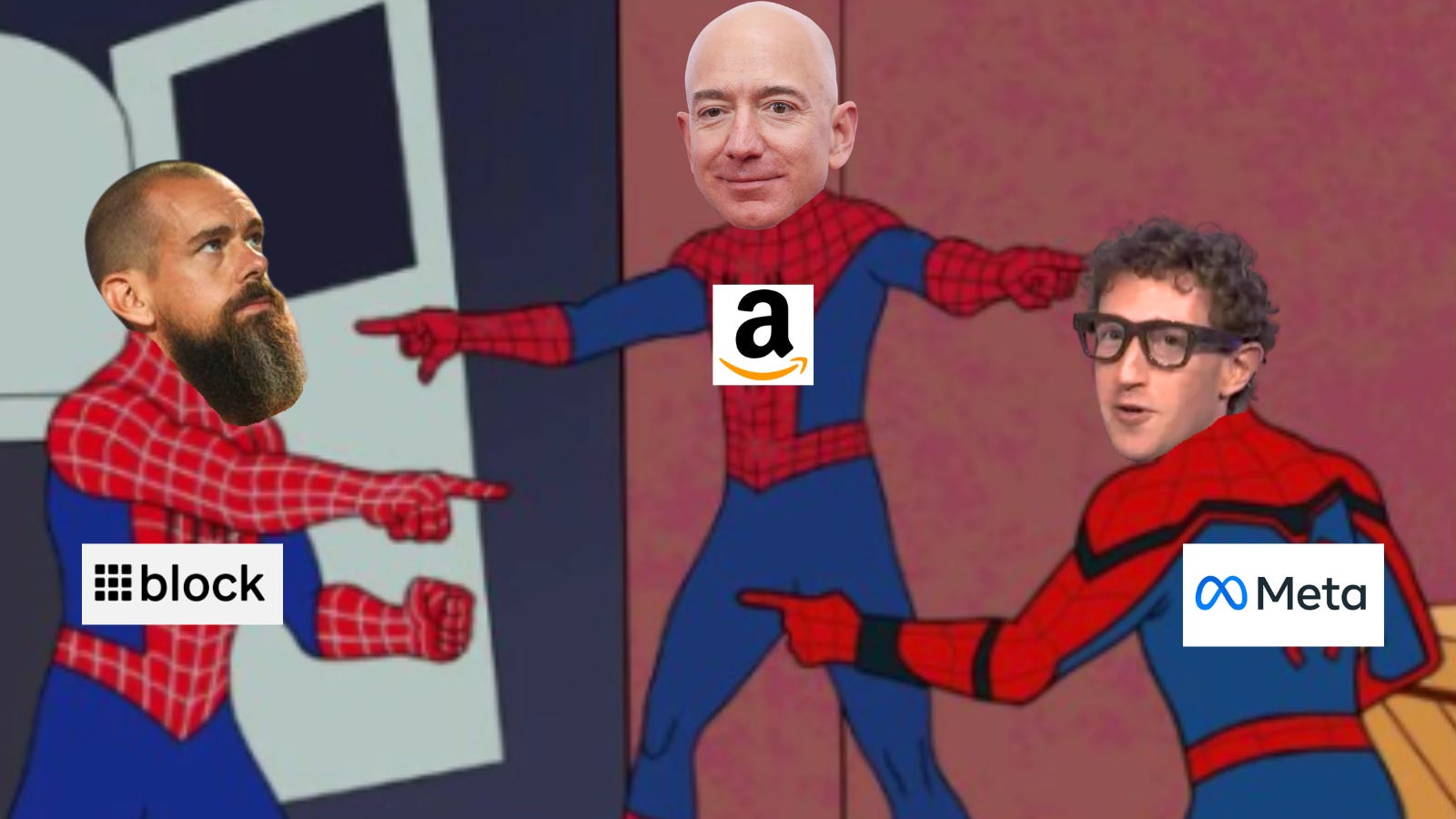
And once one company makes that decision, we can pretty quickly find ourselves inside the Spiderman-pointing-at-Spiderman-pointing-at-Spiderman meme. The boss refusing to say they have found a similar way to cut headcount can end up looking like a failure when really he’s just the guy being more cautious and potentially comprehending the limitations of the technology more clearly than the others.
You could end up punished for your prudence.
Shadow puppets of efficiency
This is to say that the pressures shaping hiring and firing decisions during this period of workforce transformation are not always based on what the technology can legitimately deliver, but rather on some kabuki theatre for investors.
Take the investigation published last week by Reuters, which found Facebook daddy Mark Zuckerberg and his leadership team had been considering a radical AI-worker replacement plan that would have reduced some teams by up to 60 per cent, through layoffs, redeployments and role closures. Ultimately, Meta settled on a more conservative 10 per cent total headcount reduction – still a lot of people.
Internal figures, obtained by Reuters, suggested the company knew its AI tools and agents were not producing the productivity gains expected but rather than dial back the strategy that depended on those tools, it kept throwing money at it, at the same time using “capital expenditure” to justify the layoffs it did actually make.
In fact, one eight-month study found that workers using AI took on broader tasks, worked at a faster pace and for longer hours. So basically, sometimes AI means you do more work, not less.
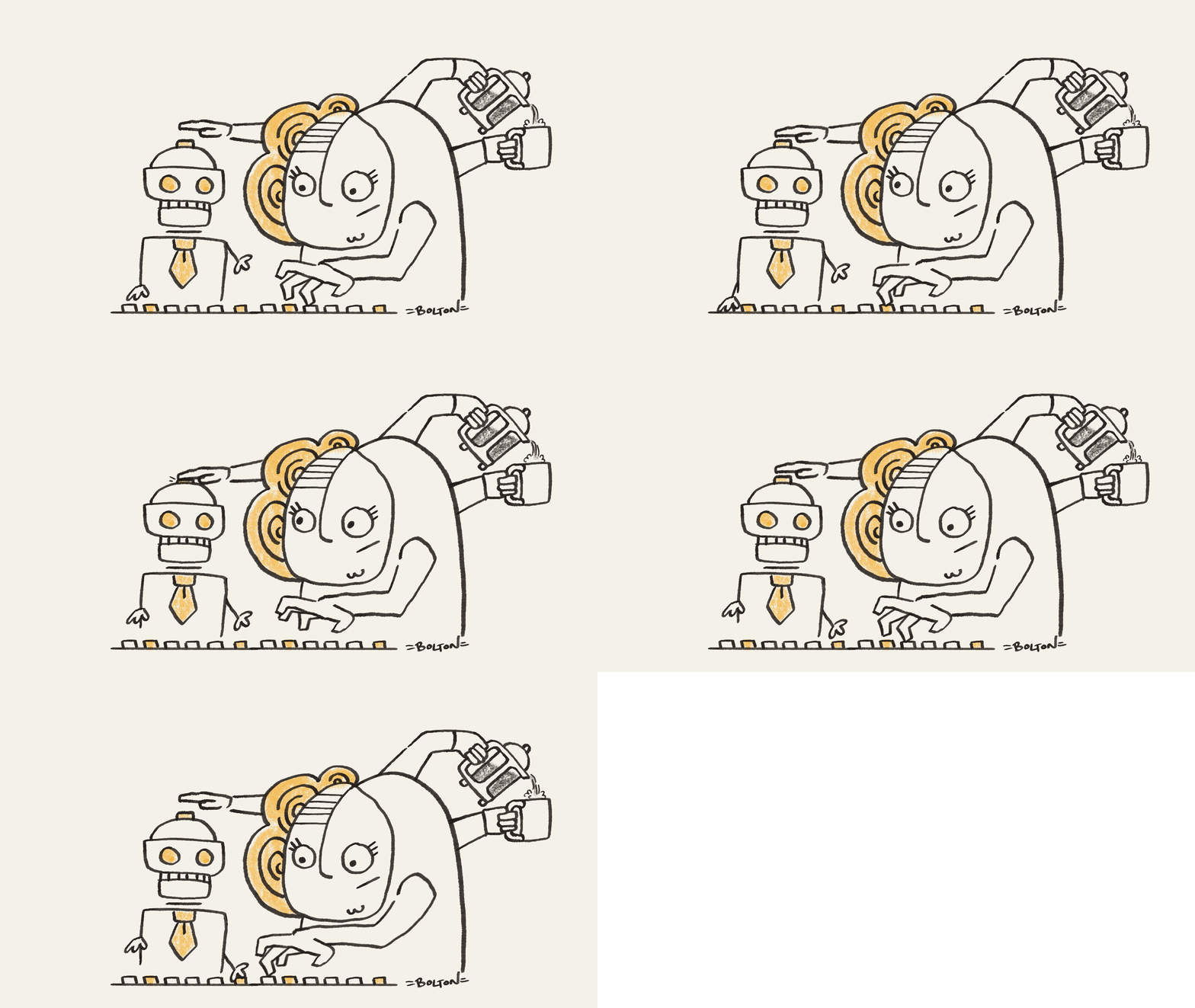
It didn’t matter that the product couldn’t replace those workers, they lost their jobs anyway.
The question, then, is not only whether the tools work. It is who gets to decide what counts as failure, what any perceived failure means and, importantly, who suffers the consequences. The people who back a bullish AI strategy could treat disappointing productivity outcomes as a reason to slow down, reinvest in people instead, or reconsider whether their initial level of investment was the right call. Instead, the investment itself became part of the argument for cutting staff.
Once that happens, abandoning the strategy is no longer just a technical decision. It could be felt as an admission that the people who made the bet were wrong.
I, of course, never make mistakes
That thought reminded me of a series of conversations I had when I was researching the personality traits most closely linked with success. The British organisational psychologist Adrian Furnham and I discussed the Peter Principle – the idea that in a hierarchy, people are generally promoted to the level of their own incompetence – and he observed that the higher up the corporate food chain a person rises the less capable they become of seeing their own blind spots or understanding the limitations of their abilities.
Laurence Peter (for whom the principle is, of course, named) was writing about this in the 1960s, Furnham marvelled. “But, my God, how prescient it was. It hasn’t aged at all. Fifty years ago this man was saying things which are incredibly salient for today.”
And when there’s ego involved – which, let’s be real, there often is in upper management – it gets even hairier. What happens when the person with the power to say “this is not working” is also the person who has staked their reputation as a bold and innovative leader on its success. The boss may be responding to real pressure from investors, but he is also deciding which evidence counts as a reason to pivot … or stop.
And technology can make that inability to see the wisdom of your own decision making clearly even more difficult. Because it’s complicated and you’re unlikely to have a perfect understanding of its risks and limitations? Yes. But in this case it's even weirder, because the technology itself will, sycophantically, lead you to believe that you do, in fact, understand it.
I’m sure you have heard of the sunk cost fallacy: that is, I have already spent all these resources on the thing, I can’t pull out now, so I keep throwing good money after bad and compound the failure. And research has repeatedly shown this doesn’t just happen on the individual level; organisations are also vulnerable to it.
There is also a measurable phenomenon in decision-making where, once a project starts to fail, people can be more likely to persist when continuing is framed as action and stopping as inaction.
There is also evidence that people can keep backing a failing project because continuing feels like taking action, while stopping feels like standing by and letting it fail. And we have a bias towards action.
What even is winning, anyway?
And now we’re stuck in a corporate doom-loop. The company spends heavily on AI, then needs to show that the spending is producing profit outcomes. That means new revenue on the same headcount or, more often, a cut. Redundancies are presented as evidence that the strategy is working; reversing course later means admitting that the company either used workers as a smokescreen for a bad investment or failed to recognise it was bad in the first place.
And when you consider all that, it’s pretty easy to see how it might not matter anymore whether AI can really do your work or whether something important like judgement might be degraded in the replacement.
If the powers that be are convinced it can, and have made significant investment in the tools and in overhauling the organisation to accommodate it, then the path might be fixed regardless.
If this letter gave you something to think about, consider forwarding it to one person who’d enjoy it too! Word of mouth is how a newsletter this new finds its people.
And I’d love to hear from you — reply to this email, comment in the app, or find me on LinkedIn or Bluesky.
For those reading, this exactly the kind of brilliant considered analysis of an issue that Rachael Bolton would hit me with everyday when I came to work with my head full of trusts and SMSFs. Thankfully I can still get it here.
I think it's quite simple Worker+AI=<Productivity>AI-Worker🌀